Automation as a strategic choice, benefiting both customers and employees
- Technologies for surface treatment

For Muskoka Cabinet Company, the adoption of advanced technologies is a crucial step not only to remain competitive, but also to ensure better working conditions across its production departments. With Superfici and SCM, this vision has become a reality thanks to a finishing line capable of managing the entire process seamlessly, delivering flawless quality consistently.
In the woodworking and furniture sector, traditionally characterized by manual processes and high labor intensity, Muskoka Cabinet Company has chosen a different path: making automation the driving force behind its industrial evolution. A journey that began more than forty years ago and today finds one of its most advanced expressions in the automated finishing solutions developed in partnership with Superfici and SCM.
“If you have a vision, if you look at other industries where automation has been successfully implemented, the woodworking industry is just ripe to take those examples and technologies, more than people might think,” says Luke Elias, President of the Canadian company.
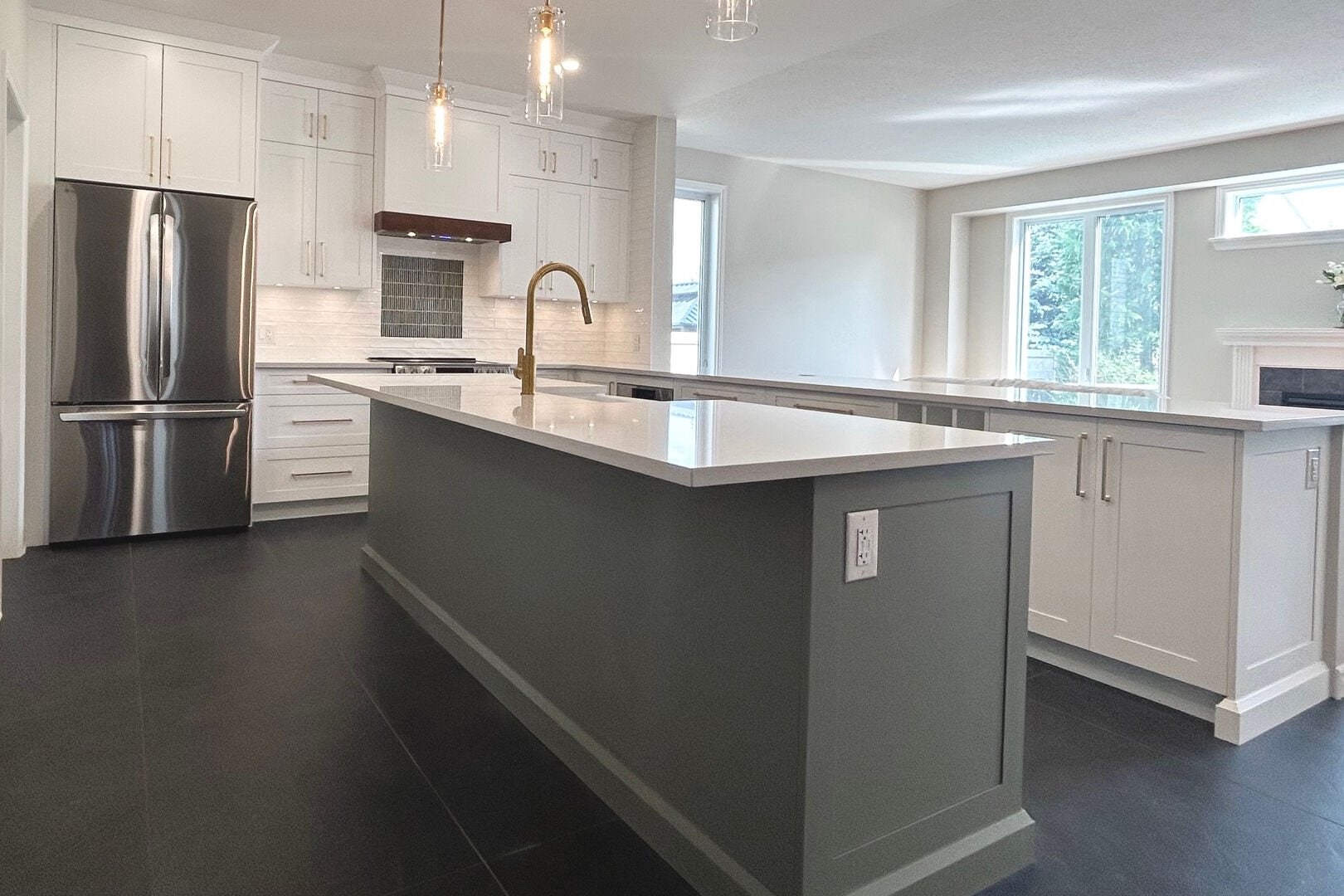
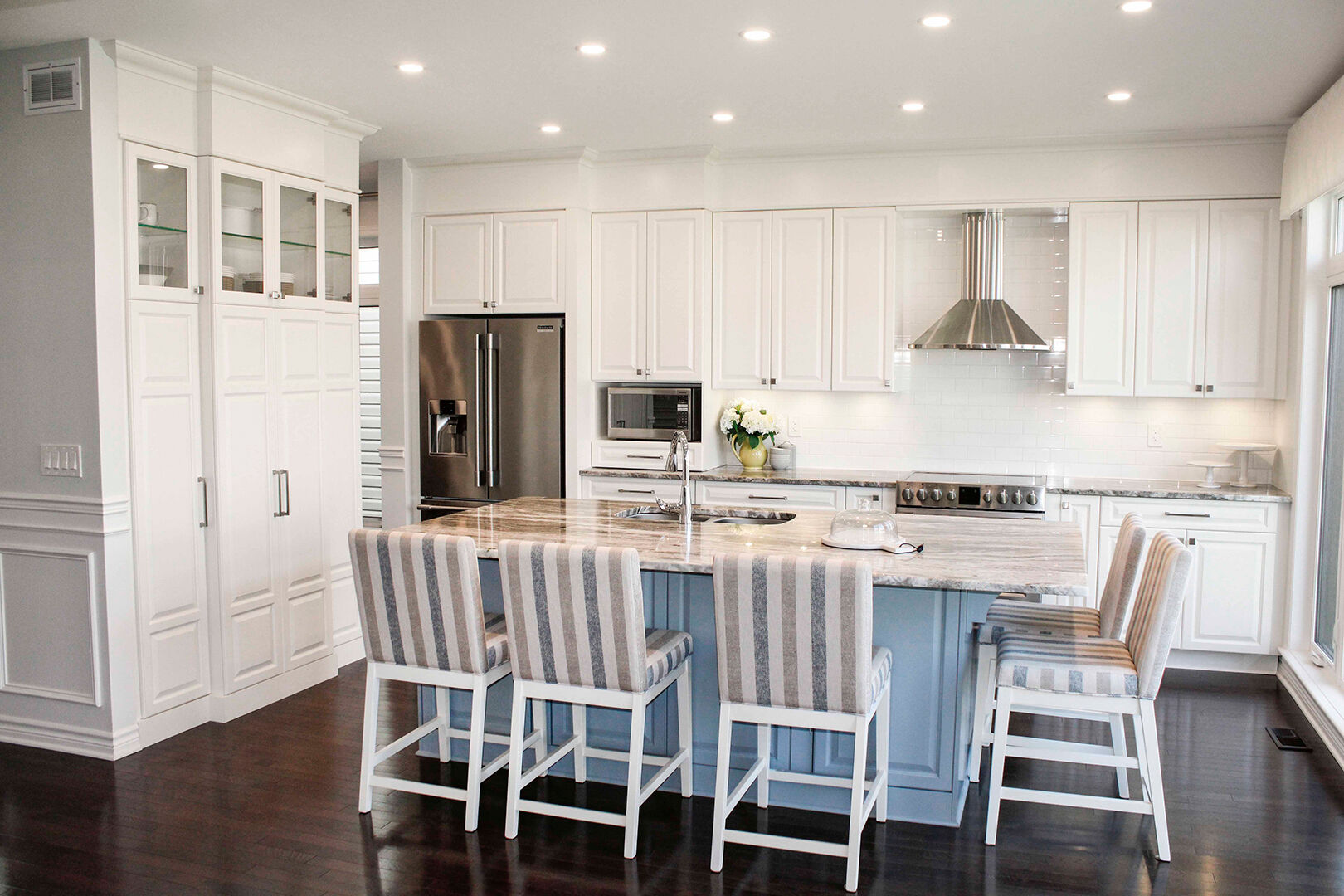
Muskoka is a residential cabinet manufacturer located near Ottawa and has built its industrial model around advanced machinery, process integration, and the enhancement of skills. Automation has never been viewed simply as an investment in machines, but as a strategic lever to make the woodworking industry more competitive and attractive.
“When you look at other industrial sectors, you already see automation, organization, and advanced working environments,” Elias continues. “I see no reason why this can’t be applied to our industry. Automation is the key.”
High technology to grow - not to replace
One clear principle has guided Muskoka since the early stages of its technological journey: automation must not eliminate jobs, but improve the work itself. “From the very beginning, we set one rule,” explains Elias. “We would never lay anyone off because we introduced a robot or improved a process. We did it to grow and we’ve honored that rule for 35 years.”
This vision is shared by the second generation as well. Mathieu Elias, Executive Vice President, highlights how technology has transformed the skill sets required within the company: “Many young people no longer want repetitive, manual jobs on the shop floor. They are very interested in engineering, programming, and automation. These are rewarding and well-paid roles. Automation allows us to reduce the most physically demanding tasks and create new professional opportunities.”
The goal is threefold: quality for customers, well-being for employees, and long-term stability for the company. “We want to provide a high-quality custom product, but at mass produced prices,” explains Mathieu Elias. “At the same time, we want to provide best in class wages and benefits to our employees. And automation helps us to do that. For the company it’s about adaptability and profitability, especially during market downturns.”
Finishing as a strategic hub
Within this production model, the finishing stage has taken on a pivotal role. Traditionally complex and labor-intensive, it was identified as the area where automation could generate the greatest impact.
This led to the collaboration with Superfici, a specialist brand within the SCM Group. “When the Superfici team visited us with all the key executives, including the President come over from Italy, we immediately understood that they were not just looking at our finishing processes,” recalls Luke Elias. “They took an interest in the entire company, in what we were doing and where we wanted to go.”
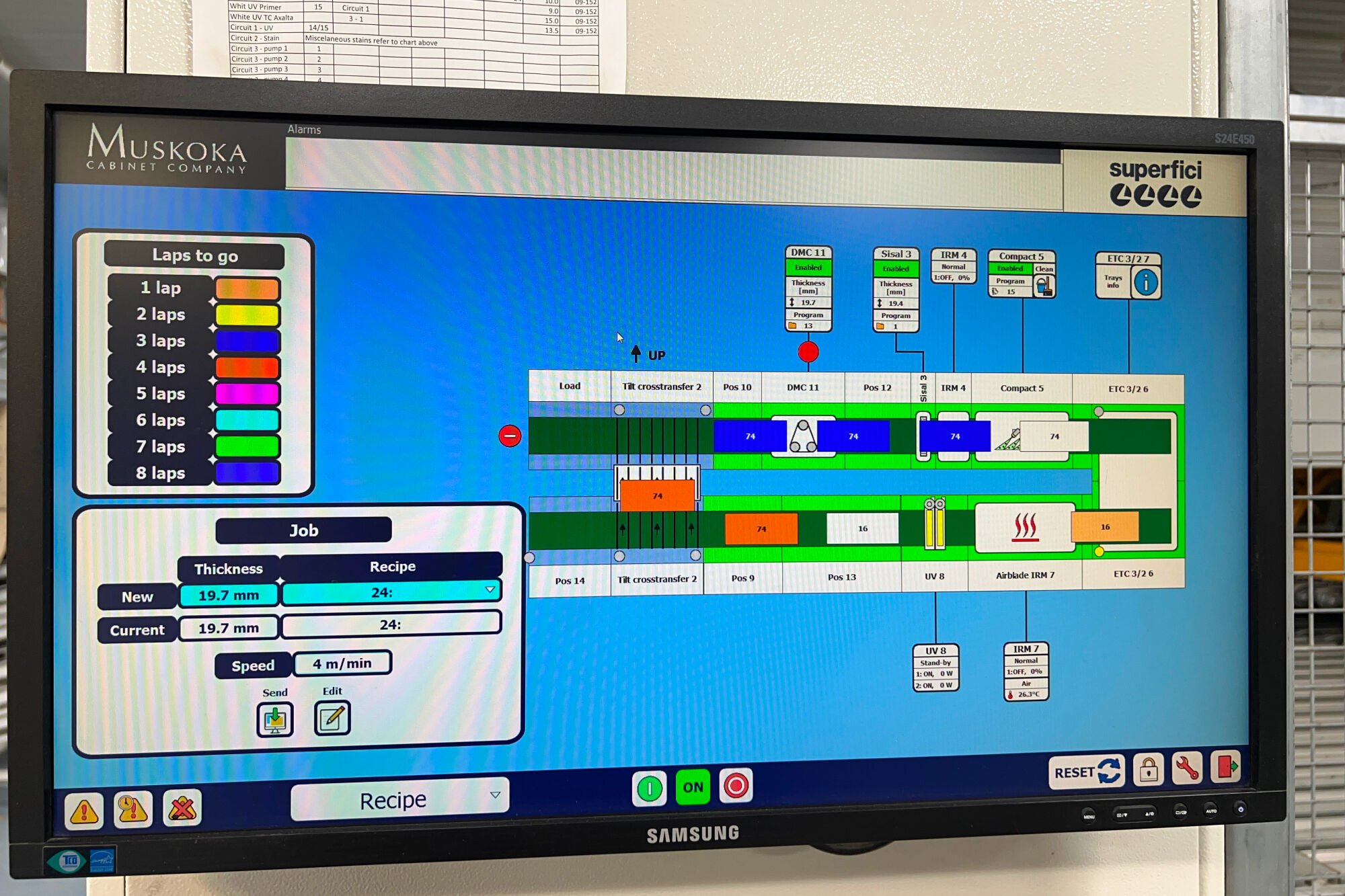
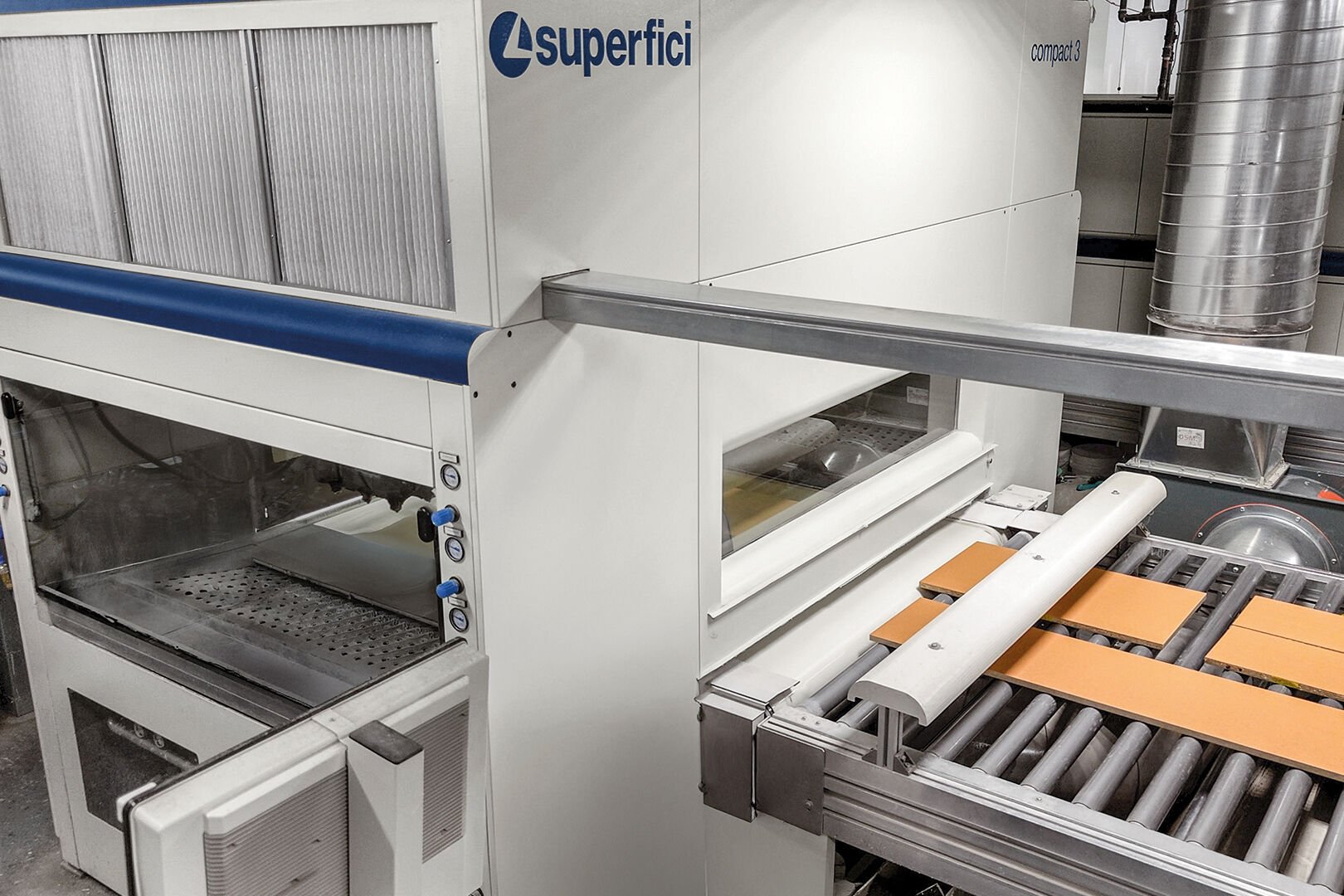
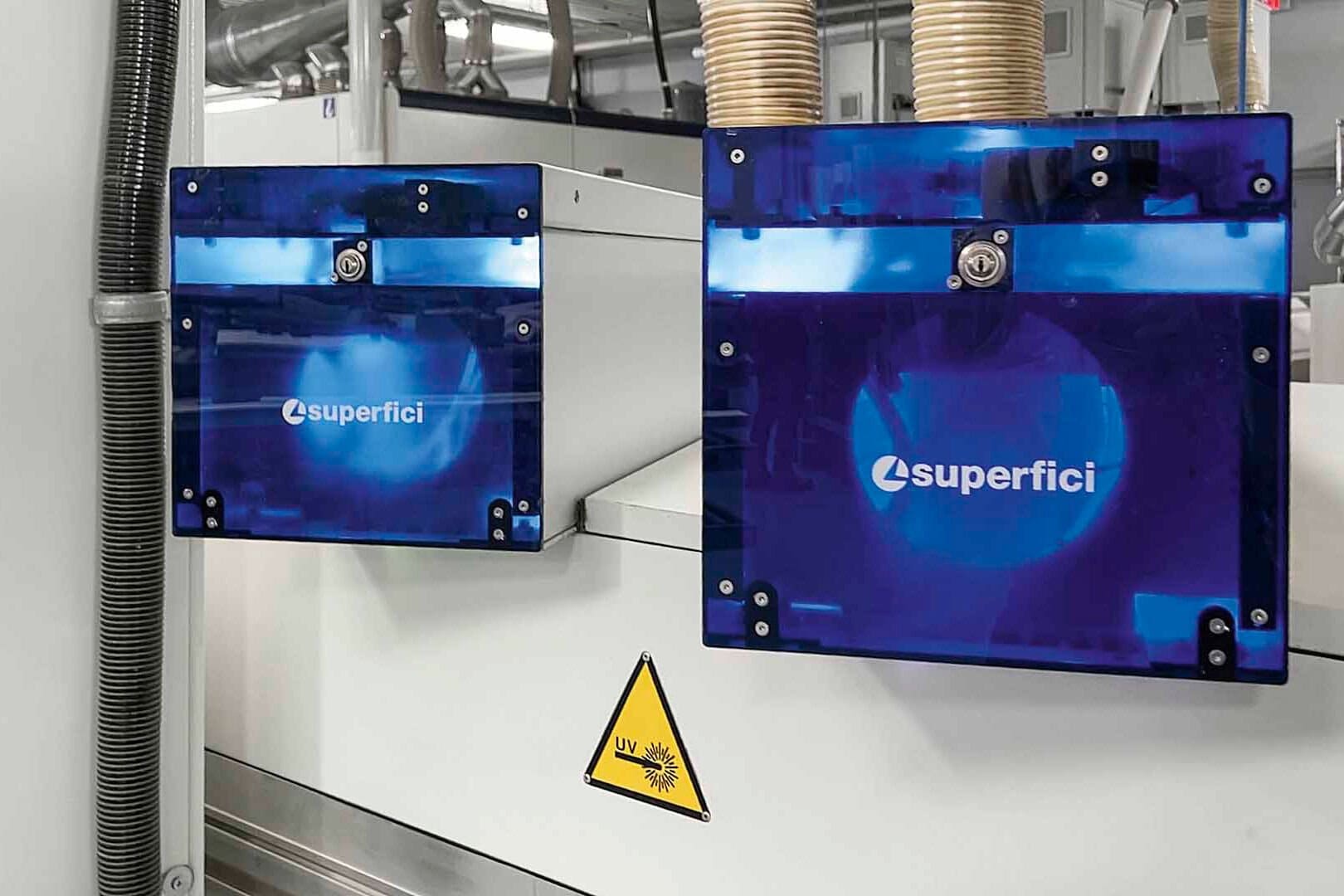
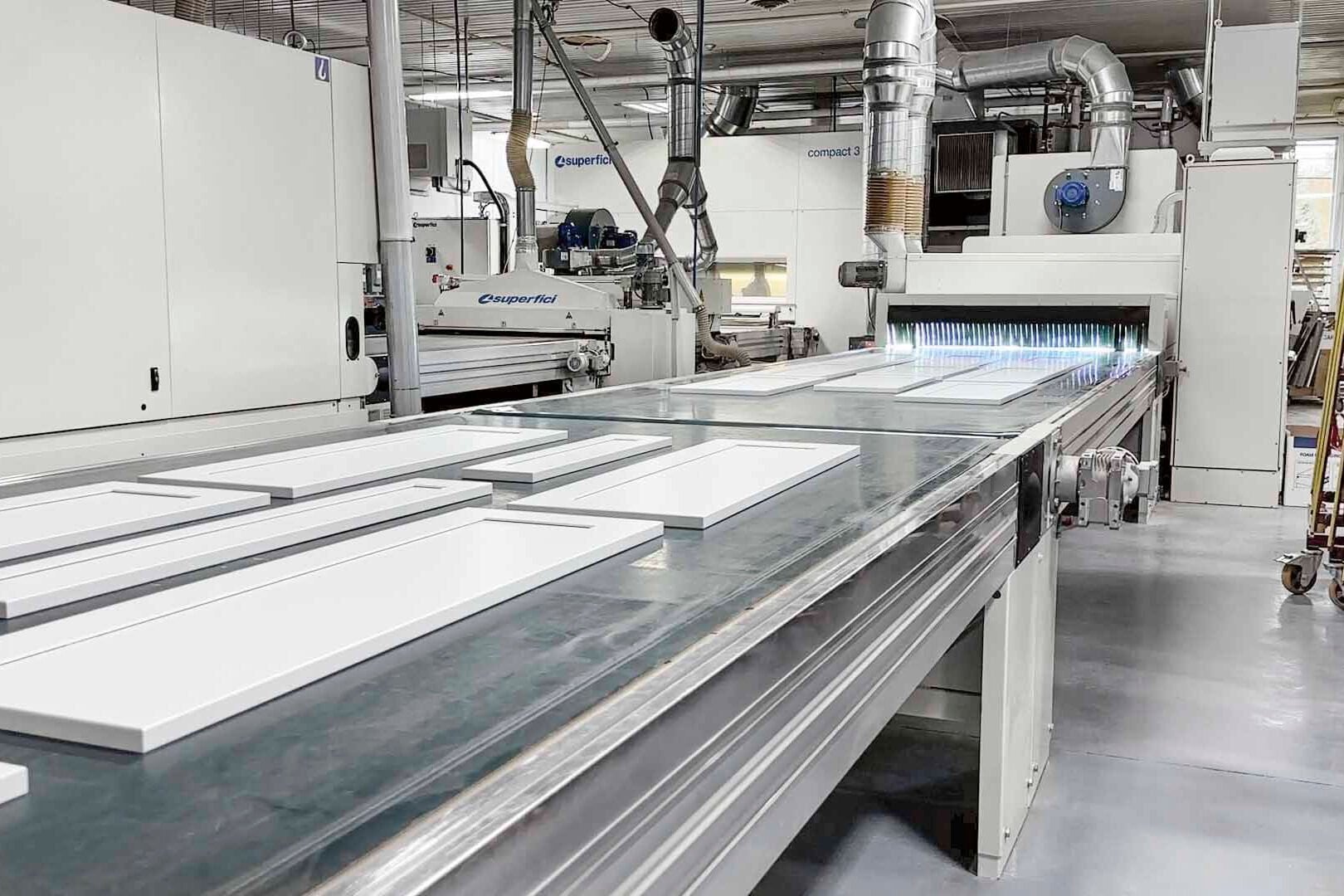
The result was the development of a custom-designed, closed-loop finishing system for Muskoka, featuring a Compact 3 HY spraying machine. This solution is ideal for a wide range of coating requirements, handling both small and large batches while maintaining high spray quality with minimal costs. The spray machine is also integrated with an air-blade hood equipped with IR lamps, a Poliedra UV dryer, and a line supervisor system. “The Superfici line is truly unique, I haven't seen another one like it!”. A highly automated system capable of managing the entire process without downtime. “We load the line in the morning with large production volumes, and the material runs through the entire cycle: six coats of finish, automatic part flipping, color changeovers, automatic adjustments, and recipe management. Everything happens within the line,” Elias explains.
A new automated sanding solution for premium finishes and reduced manual labor
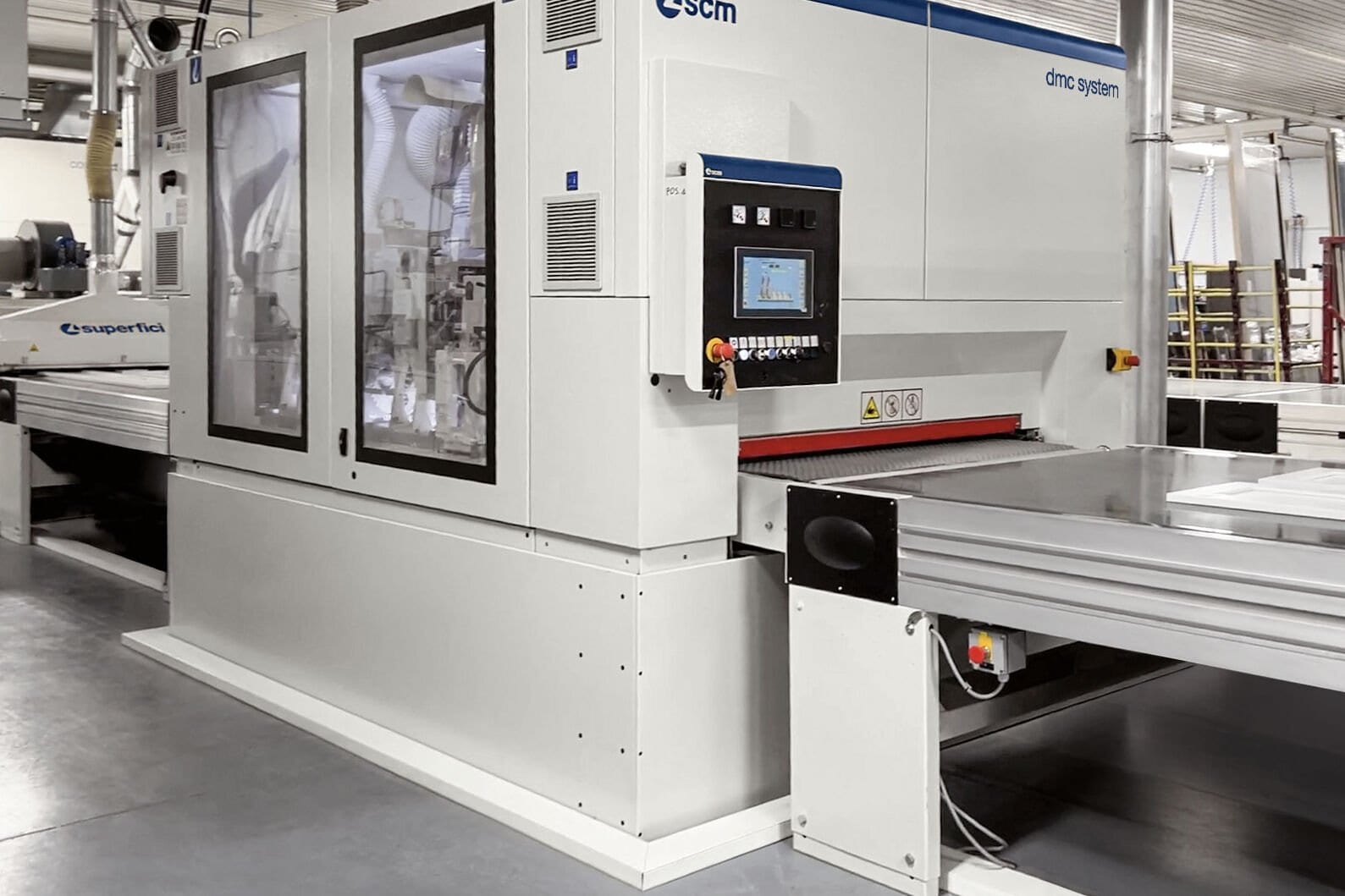
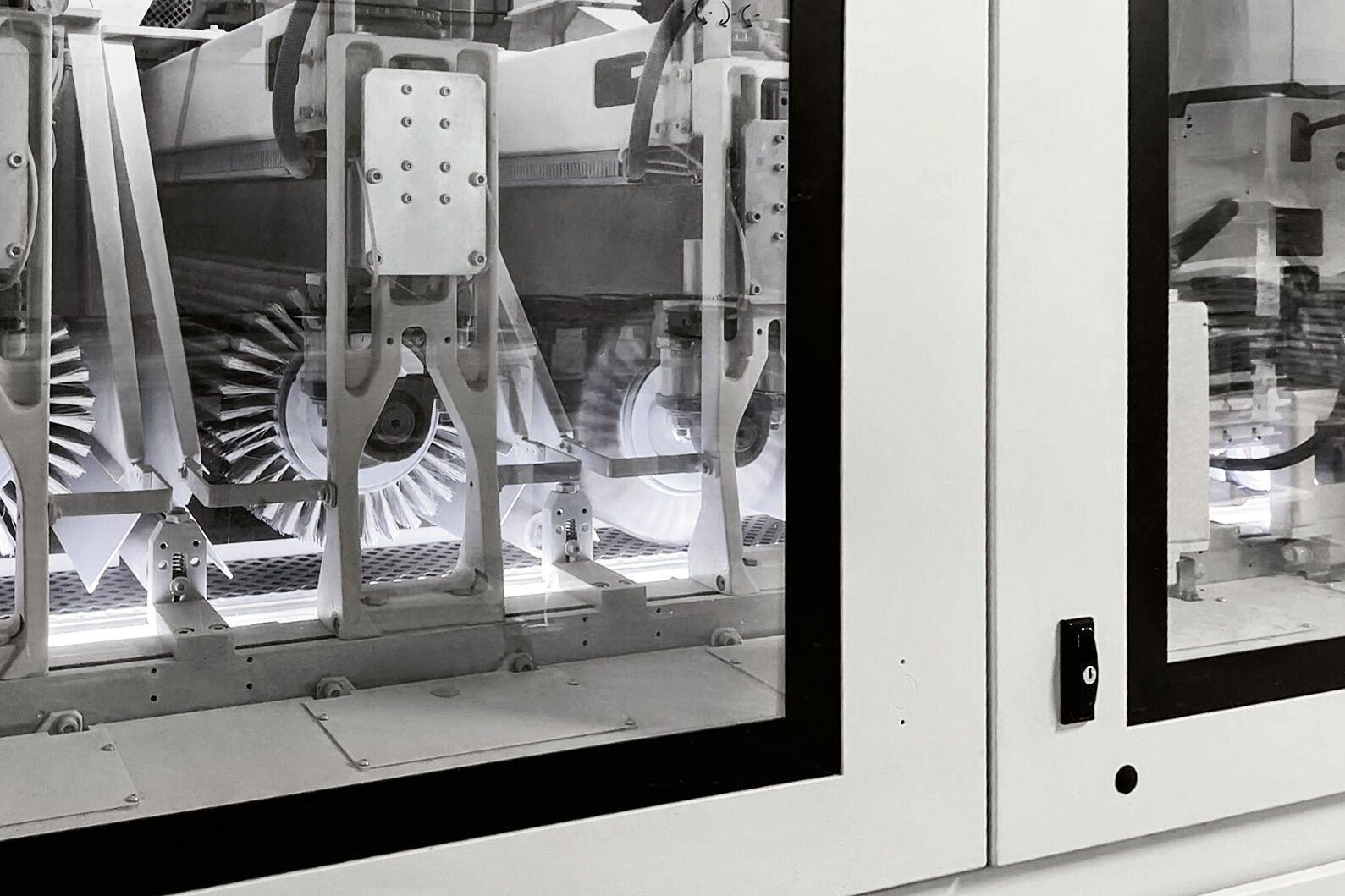
One of the main objectives of the project was the complete transition to UV finishing. To achieve this, an automated DMC System sanding machine with five working stations was integrated into the line, combining wide-belt sanding units with abrasive brush heads. The complementary action of these units delivers excellent results on both flat and profiled surfaces of cabinet doors.
Compared to manual sanding, this solution significantly increases productivity while ensuring extremely uniform, high-end surface quality. In addition, compared to traditional manual sanding benches, dust emissions in the work environment are drastically reduced, resulting in clear benefits for workplace health and safety.
Elias expresses strong satisfaction with the solution. “We wanted to eliminate as much manual sanding as possible, and with this closed-loop system, we’ve nearly achieved that goal.”
The numbers clearly demonstrate the impact of the investment: “We used to have 13 people running our finishing department, and now we are down to three,” he adds. “The line can run autonomously for hours, while our employees can be reassigned to other, higher-value tasks.”
A more advanced working environment
The benefits of automation extend far beyond productivity. Bruce Lamontagne, Panel Processing Supervisor at Muskoka Cabinet Company, emphasizes the human value of this transformation: “What impressed me from the start was how Muskoka integrated cutting-edge technology at every stage of the process. It’s a privilege to develop your skills while working with systems like these.”
As Lamontagne notes, increased automation has made the work more engaging and skilled. “Solutions like this allow you to learn, contribute, and grow. That’s what makes a job truly interesting in the long run.”
A partnership focused on the future
The installation phase of the Superfici line further confirmed the strength of the partnership. “It was the most impressive installation I’ve ever seen, completed on schedule, even slightly ahead of time, with absolute precision,” says Luke Elias. “Everything is clean, compact, and meticulously designed. This made the transition and training process much smoother.”
For Muskoka, choosing Superfici and SCM technologies was, above all, a choice driven by vision. “We felt we were working with a partner who truly understood us,” Elias concludes. “A partner who knew where we wanted to go and what drives us forward. That’s why we were confident that Superfici would deliver a solution fully aligned with our expectations and ambitions.”
This installation was executed by Superfici America, the North American division of Superfici. Companies in North America looking to automate their finishing process can connect with Superfici America for expertise in industrial finishing automation and integrated finishing lines.
DISCOVER MORE ABOUT SUPERFICI AMERICA