Experts in high-end bespoke architecture
- Timber construction technologies

Igo Egur was founded in the timber construction sector with the aim of being able to do everything, in order to face even unfavorable economic periods with resilience. In line with this development plan, the company relied on SCM for the purchase of an “area” CNC machining centre, highly appreciated for its flexibility and 5-axis interpolation.
A lean structure, the use of advanced technologies and a vision of sustainable innovation that prioritises local “zero-kilometre” timber. These are the pillars behind the growth of Igo Egur, a Basque company led and founded by the Gorroño family, which successfully overcomes the limits of traditional systems for structural timber processing.
Peio Gorroño’s journey is a true lesson in entrepreneurial strategy. After founding and growing the construction company Egoin to reach 100 employees, the entry of a new management team and its subsequent sale to the Austrian group Hasslacher Norica Timber in 2023 led to his exit.
The Basque entrepreneur then set himself a new goal: to create a new company with a “family soul”, a leaner structure and a clear growth plan. Thus, Igo Egur was born in 2023: a timber “boutique” run together with his sons, Mikel and Jon.
Current figures show how successful this initiative has been: from €1 million in turnover in 2024, Igo Egur rose to €2 million in 2025 and expects to close 2026 at €3.5 million.
Located in a former industrial lathe factory, Igo Egur has a 6,000 m² facility and no more than 20 employees in production. A choice driven by a clear idea: not exceeding a total of 50 collaborators. “Beyond this threshold, bureaucracy suffocates the craft spirit,” says Gorroño.
5-axis technology as a strength
Igo Egur stands out in the market for its ability to carry out highly complex technical projects that standard construction systems are unable to handle. All this is made possible thanks to the technological opportunities offered by its new machine: an SCM “area” CNC machining centre.
The company has focused on interpolated 5-axis technology, moving beyond the traditional rigid macros model, enabling ISO code programming and facilitating the production of complex and curved geometries in structural timber.
The company was looking for a solution that would allow a qualitative leap towards increasingly complex machining, finding in the continuous 5-axis interpolation of “area” and its high programmability the key elements to “make the machine dance” and fully exploit its potential.
“The possibility to work dynamically on articulated geometries, combined with structural robustness and precision on large dimensions, has opened up new application perspectives, from CLT panels to curved beams for projects with multi-inclined and hyperbolic structures,” says Mikel Gorroño, Production Director of Igo Egur.
Also decisive in the choice was SCM’s approach, capable of developing a non-standard and highly customised solution, supported by fast and effective technical service. A mix of flexibility, listening and expertise that has consolidated a partnership oriented towards innovation and future growth.
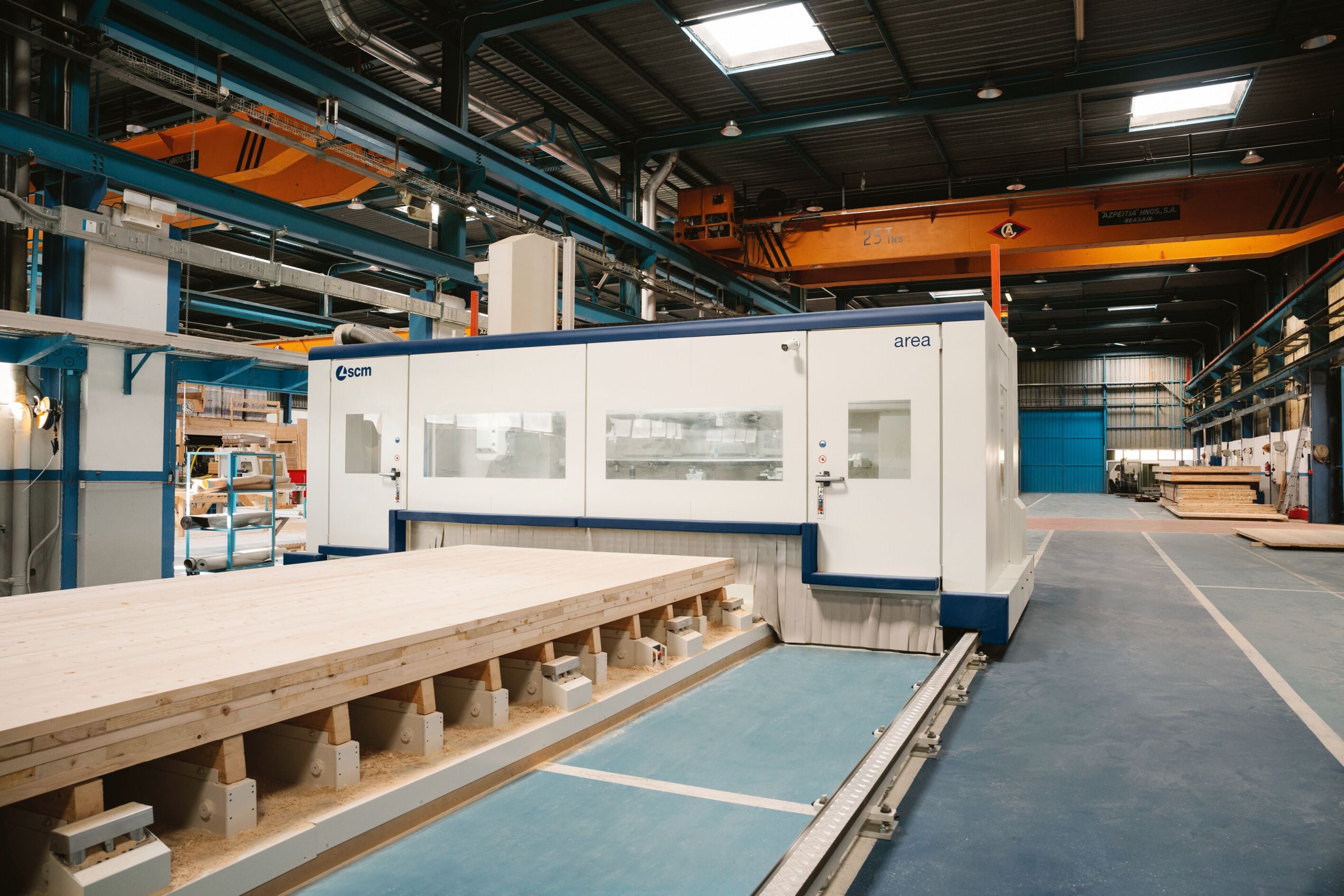
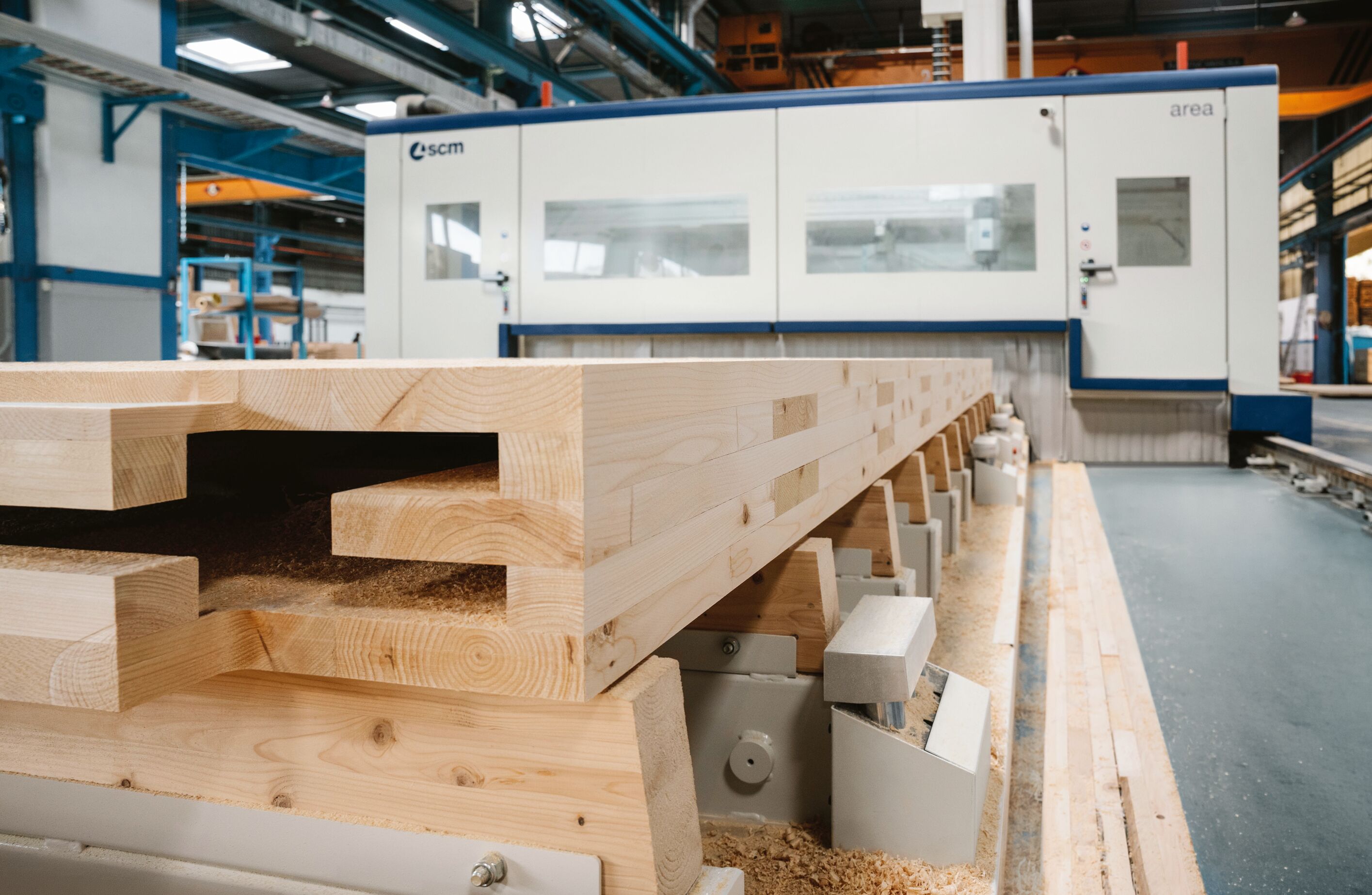
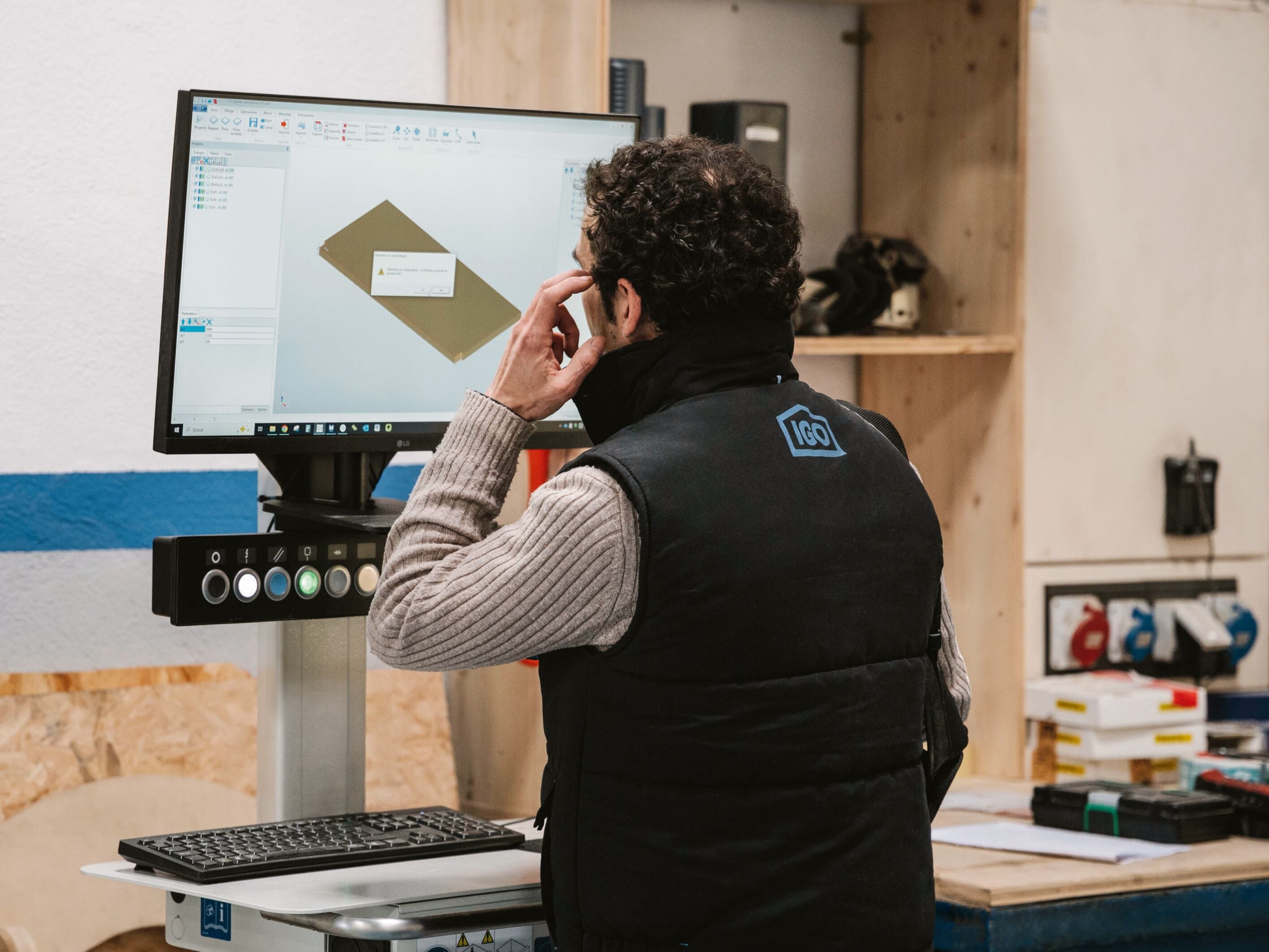
“This machine is a model of flexibility and precision, exceeding industry standards, with a structure designed for minimal tolerances on large scale components,” continues Mikel Gorroño. “These advantages are essential to deliver high-precision engineered assemblies.”
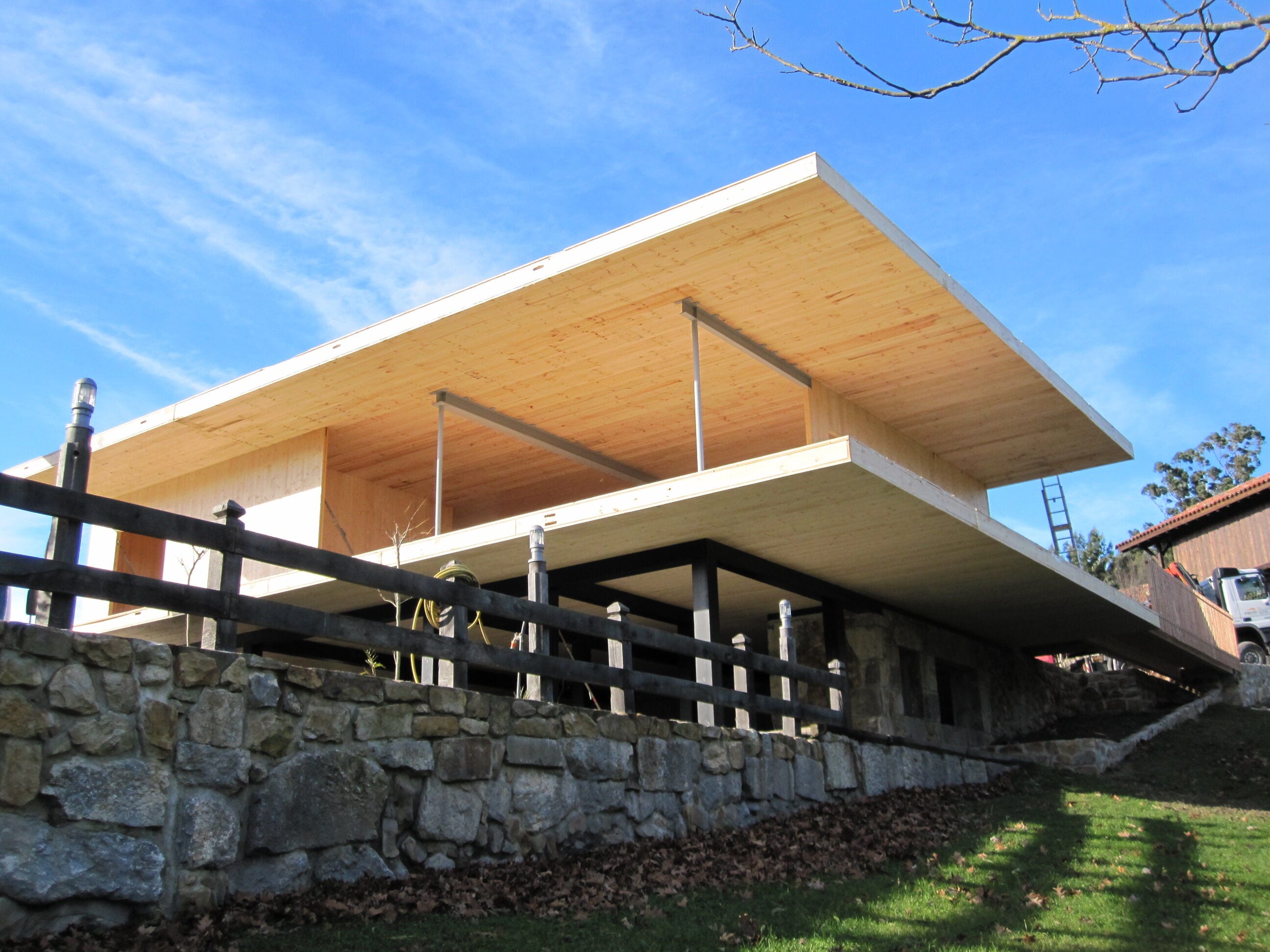
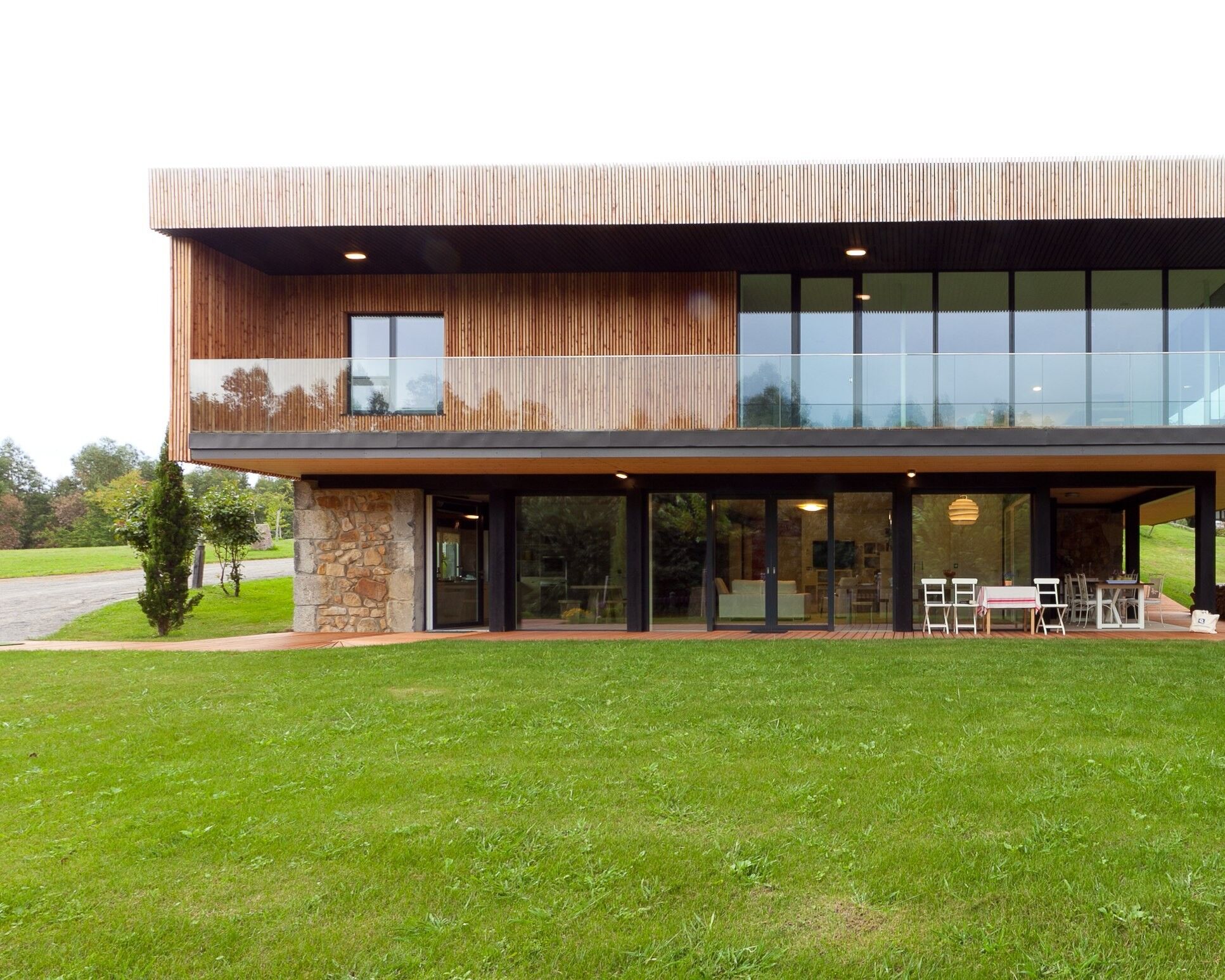
The company’s strategy is based on “being able to do everything” to ensure resilience against possible economic crises. Igo Egur produces unique timber structures, curtain wall façades, restores traditional farmhouses managing asymmetries and out-of-square walls, and also offers fully finished modular constructions (drywall walls, windows and electrical systems pre-installed at the factory). It also uses lightweight CLT, with panels featuring internal cavities to reduce timber consumption, improve bending performance and facilitate electrical system integration.
In this way, Igo Egur claims the dignity of technologically advanced craftsmanship. “5-axis technology does not replace humans, but enhances the work of craftsmen, enabling geometries that handwork alone could not achieve while maintaining absolute precision on large-scale components,” says Peio Gorroño.
Igo Egur does not aspire to volume dominance, but to specialisation leadership. Its R&D commitment on lightweight CLT is another example of how the industry must evolve using less material and more ingenuity.
From photovoltaic pergolas in the Canary Islands to curtain wall façades in Cambridge, the vision of Peio Gorroño and his sons is clear: the architecture of the future must maintain local roots or it cannot be sustainable. The future lies in the nearby forest, processed with the precision of an operating room.
Investing in technology while the world collapses
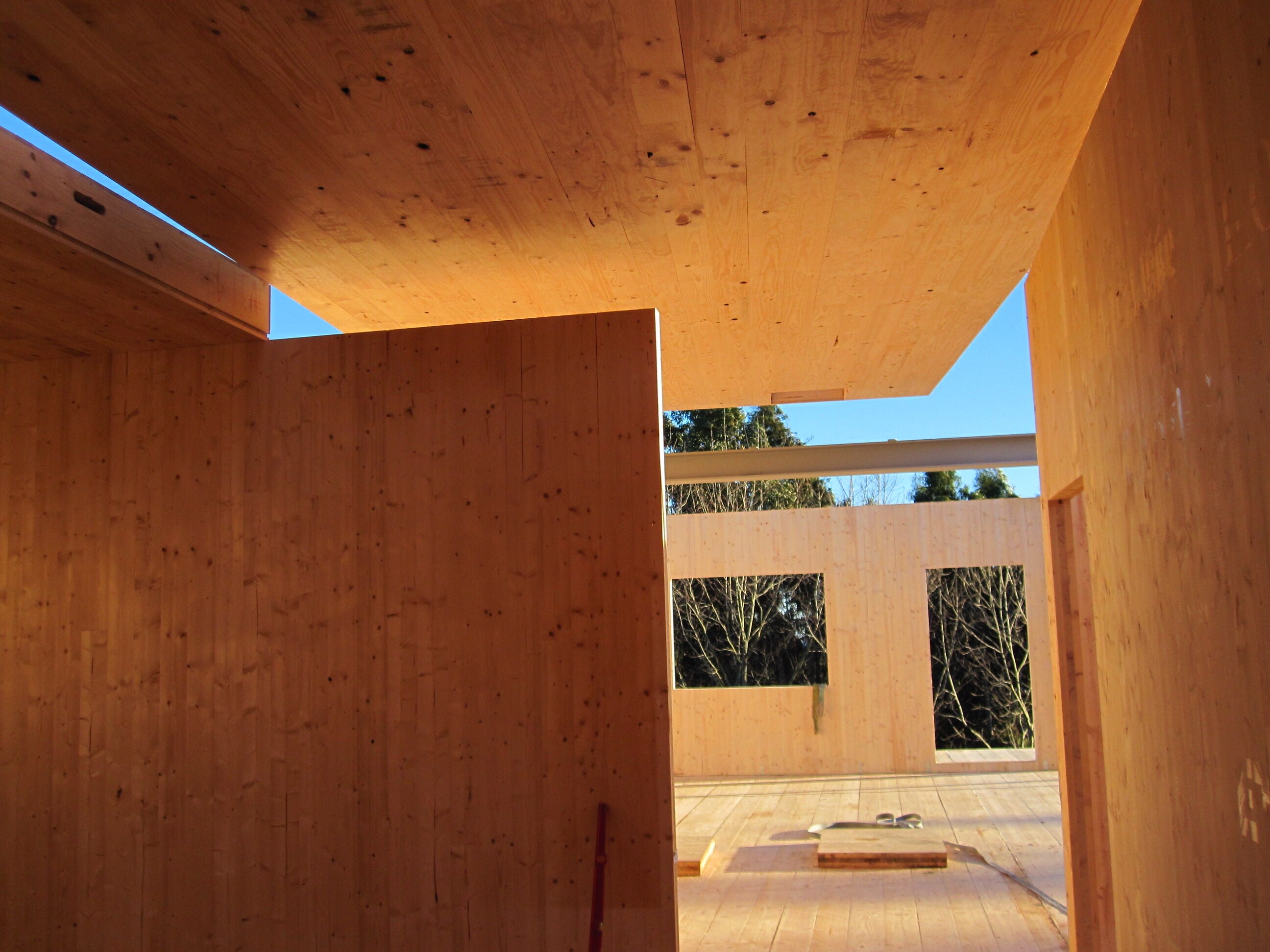
The 2008 crisis was the epitaph for much of Spain’s construction sector. However, in 2009, in the midst of economic paralysis, Peio Gorroño, as director and founder of Egoin, made a decision he now defines as “salvation”: investing €4 million in CLT (Cross Laminated Timber) technology. At that time, CLT was an unknown material in Spain, France or England; only Italy and Central Europe were beginning to glimpse its potential. While competitors were shutting down, the agility of a lean structure with little indirect employees enabled the company to lead the introduction of CLT in the Iberian Peninsula.
A veteran’s warning
At a time of expansion in timber construction, it is worth listening to the technical observations of those with long experience in the sector. Peio Gorroño emphasises the importance of paying particular attention to multi-storey timber buildings, especially to the correct design of wet areas such as bathrooms and kitchens. Proper planning of these construction nodes, together with accurate execution and adequate maintenance, is essential to ensure durability and performance of CLT structures.
“In multi-storey CLT buildings, waterproofing of bathrooms, kitchens and critical nodes must be carried out with the utmost rigor. This is not a secondary aspect, but a fundamental issue of design, execution and maintenance to ensure the durability of the structure,” he warns.
Although there is a real trend towards multi-storey residential buildings in CLT, with current projects in Catalonia, the Basque Country and England, Igo Egur maintains a cautious approach based on long-term maintenance considerations.
As Peio Gorroño states: “The key to future success lies in industrialisation and total prefabrication within the factory to compensate for the shortage of skilled labour on site.”
The rebirth of a forgotten material
During the 20th century, Spain’s architectural landscape was dominated by concrete. After the Civil War, timber was relegated to oblivion, burdened with a stigma of low quality and vulnerability to fire and moisture. It seemed a material of the past, confined to the restoration of rural hermitages or minor structures. Yet today, timber is experiencing a true renaissance that is not only aesthetic, but deeply technological.
This paradigm shift is not accidental, but the result of bold visions such as that of Peio Gorroño, who states: “Timber returns not as a nostalgic resource, but as the cutting-edge material of the 21st century.”